
Recently I learned that our old house in Suffolk was back up for sale, so out of curiosity I had a peek to see how the place looked now. Oh my. What a mistake.
The current owners have sold off our beloved wildlife area, which has since become a shanty town of dilapidated sheds and poly tunnels, but worse, our lovely pond is no more. 😥 It really was our pride and joy. If you love wildlife, nothing beats a pond for attracting a fantastic variety. This post celebrates pond life – and hopefully will encourage at least one or two Doodlecat readers to give it a go. You won’t regret it!
Where to begin?
Of course, before you see any of the wonderful species that may or may not visit, there is the unremitting slog of actually digging the thing! Fortunately my mate Dave came for a weekend, and we soon had a very satisfactory hole, with ledges to support plants. We tapered the ends of the pond to make sure that any hedgehogs or other small mammals that might fall in could get out easily.
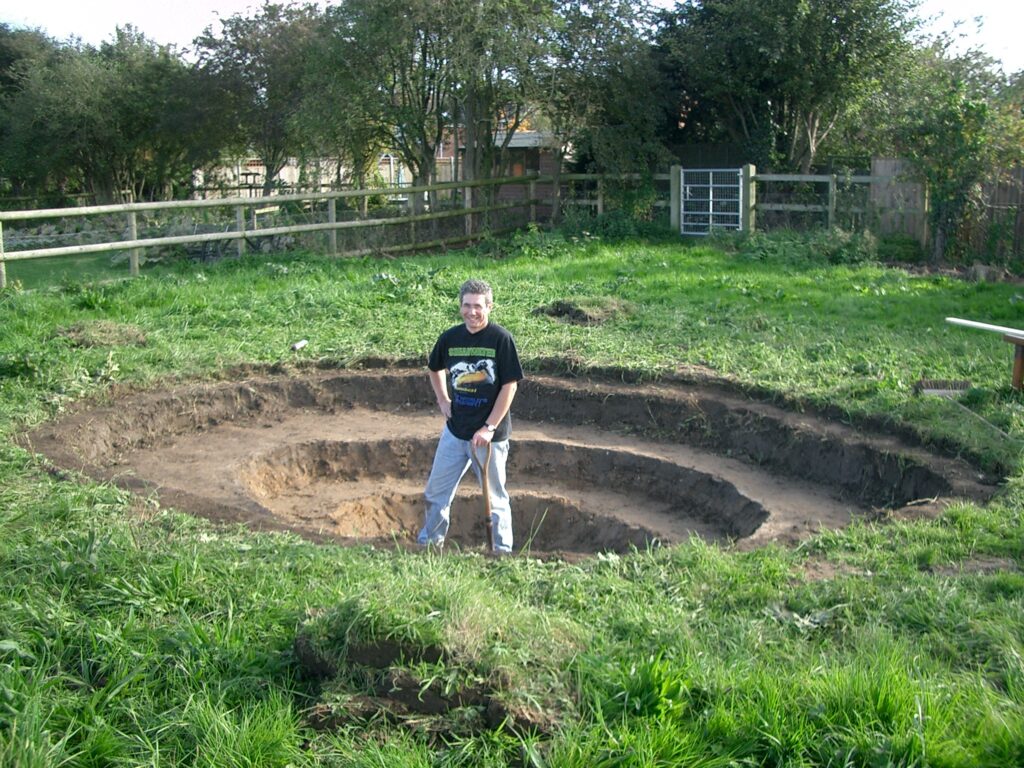
Then, of course, it had to be made watertight. This was no problem where I used to live in Cambridgeshire. If you dug down at our previous house you were soon carving your way through the densest clay. Here on the edge of the Suffolk Brecks the soil is light and sandy, so I opted for a butyl rubber liner, protected by woven geotextile underneath. This ensured that no sharp flints or stones would puncture the liner. I laid the same textile on top so that any sand and soil put into the pond could not puncture the liner from above if I was wading in it.
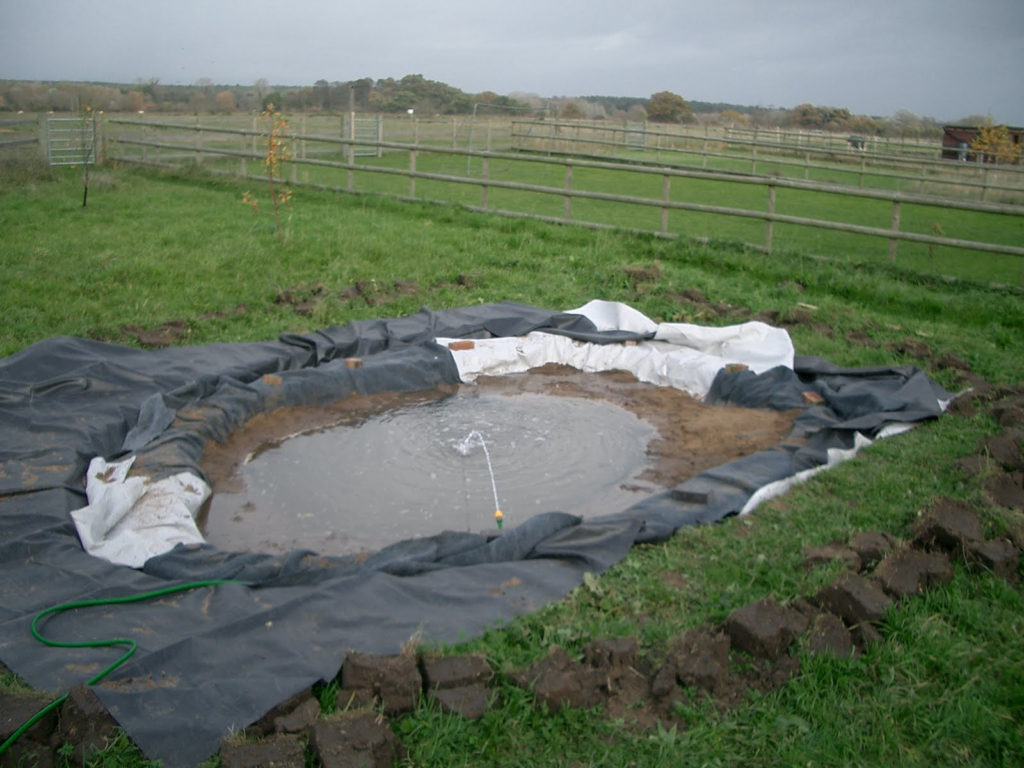
Which brings me to a useful tip. When you anchor the membrane in a surrounding trench, don’t run the top textile into it as well. For three anxious days I thought the pond was leaking. What was really happening was that the textile above the water line was acting as a wick. Water crept up the textile by capillary action and either evaporated or was absorbed by the surrounding soil. In any event it lost 180 gallons in two days! Suddenly I realised what was going on (O level in physics not wasted). I cut the textile around the edge and folded the excess below the water line. Result – no more water loss. Phew!
The next tip is to do with water. I made a big mistake by filling the pond from a hose attached to the domestic supply. In many agricultural areas the groundwater is now full of nitrites, which is ideal for promoting the growth of blanket weed. Fortunately, when we bought a few aquatic plants, some pond snails hitched a ride to our pond. They soon set about demolishing the evil green slime. Even so it took a few months. From then on we kept the pond topped up with only rainwater captured in butts via a concealed hose. The pond then remained pretty much crystal clear.
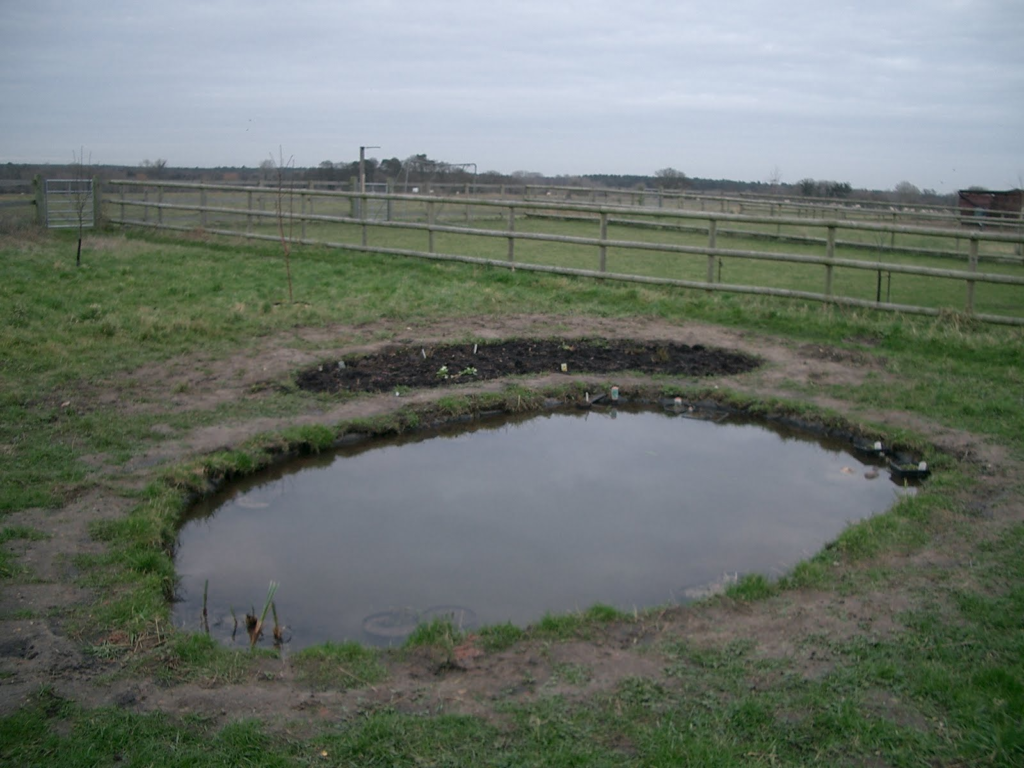
We mixed sand with a little soil (not too much) to form a natural bed. Then in went oxygenating plants, plus potted water lily (for shade in the water) reeds, sedges, arums, marsh marigolds and iris etc. We were set up and ready for the aquatic life to arrive. To get things going, in the Spring we took a couple of bottles to a nearby natural pond and filled them with water to ‘inoculate’ our pond with water fleas and the like.
The pond comes alive
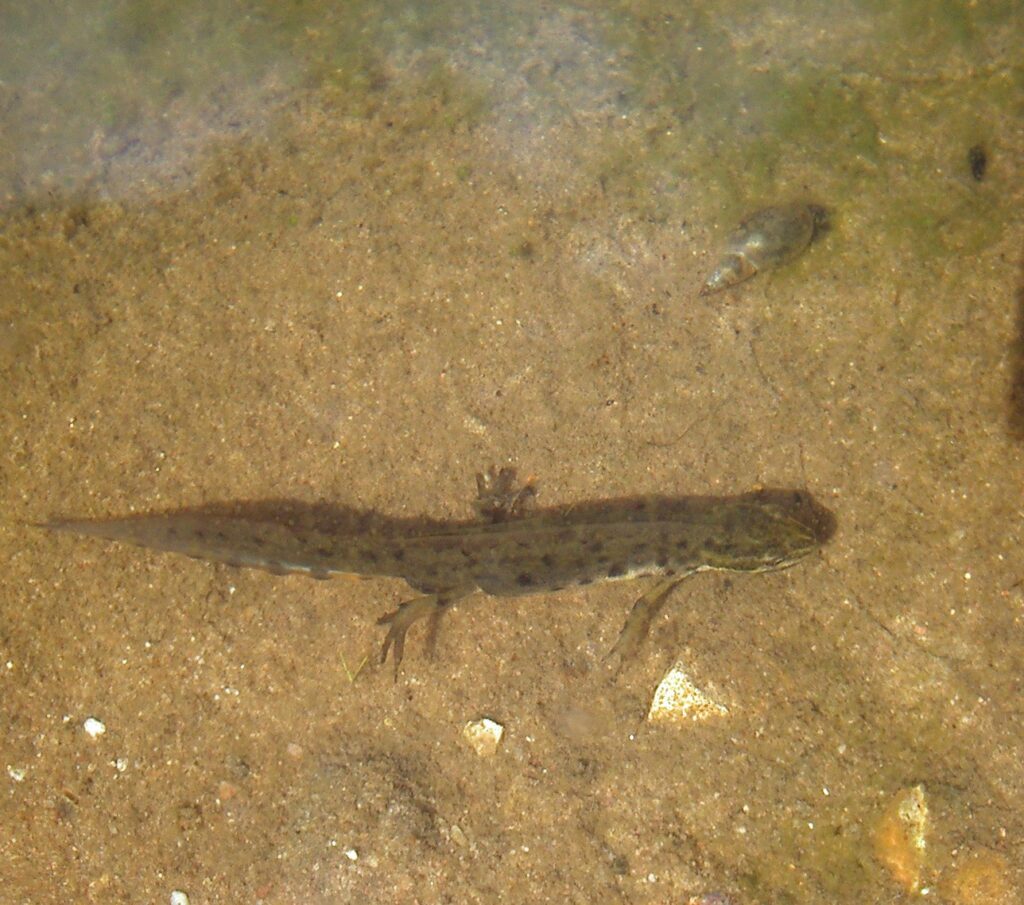
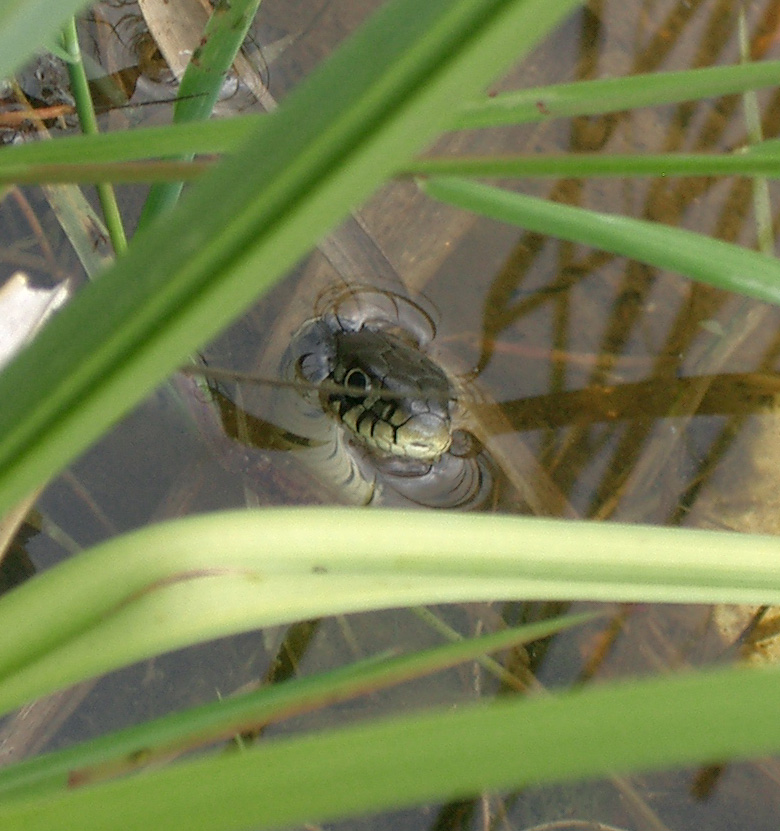
The first arrivals were a pair of ducks, who set about eating all the plants. Eventually we had to net the pond until they finally accepted that this was not to be their home! Thereafter, though, we enjoyed a wonderful procession of wildlife. The first noticeable arrivals were diving beetles, soon followed by frogs, newts, dragonflies (and their mini lobster larvae). Then, tempted by the chance of the odd amphibian for lunch, a couple of grass snakes swimming in the water. Later we found that they had laid eggs in our compost pile, and we had grass snakes around the field thereafter.
A summer drought caused some anxiety as water levels fell perilously low, but it rained just in time.
We were delighted with the results. Birds came to drink, bathe and splash around and small mammals visited too. Did we introduce any fish? No, as fish would gobble up all the dragonfly larvae and other small creatures, and the diversity that we sought would have been much reduced.
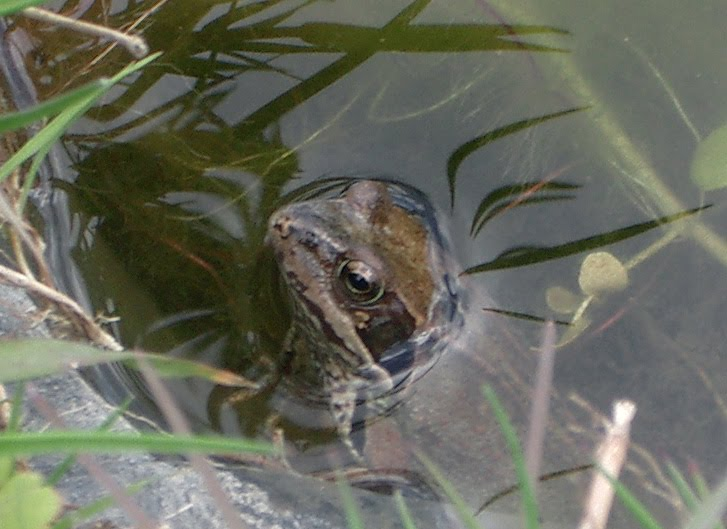
By the time full summer arrived, the water lily leaves covered about a quarter of the surface, giving shade for the creatures that prefer it. Below is one of my favourite pond visitors – Hissing Sid, the grass snake dropping by in search of a tasty snack.
Overall the wildlife area was a great success. It did take just a little more management than I had first imagined (I had imagined none at all). Maintenance was mainly cutting the field at the right time to encourage the widest variety of wild flowers. That and keeping the rabbit population out! We also put up boxes with leaves and straw inside, or bundles of cut bamboo canes for mason bees and leafcutter wasps. These insect hotels were soon fully occupied.
Relax and enjoy!
Once the structure is in place, keeping a wildlife area is not nearly as time consuming and arduous as ‘regular gardening’. The rewards are great, and often unexpected, like the arrival of bee orchids, scattered throughout the garden in June.
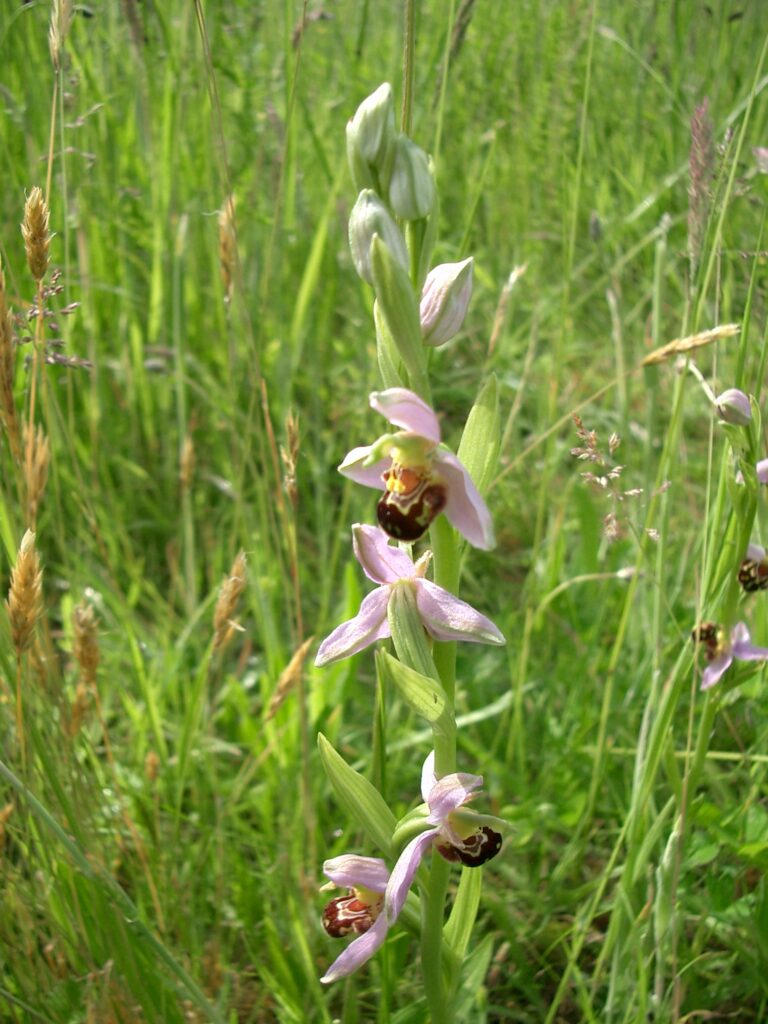
Yes, it takes quite a bit of hard work to begin with, but afterwards the bore of mowing is restricted to just a couple of pathways and the rest twice a year. Sometimes the pond needed a little weeding (see below)! Most nice days we just sat on the bench and watched life in and around the pond, sipping the odd cool beer of course.
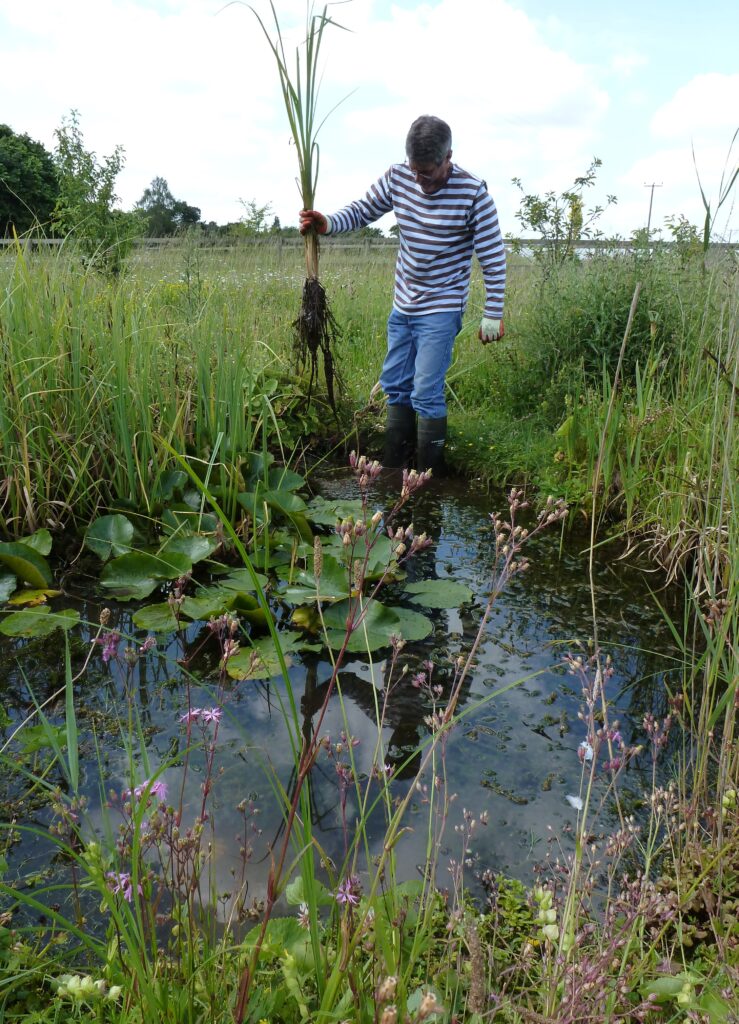
If you hate conventional gardening, and have a neglected area, even if it’s in the middle of town, it’s well worth giving a wildlife garden and pond a go. Ecologically sound – and not too much hard work.
Perfick!
How splendid! I wish whoever had constructed our pond had been as thoughtful. They just dug a massive hole, lined it badly, with steeply sloping edges, no ledges and filled it with water. No plants and it’s proving very difficult for us to establish any. Hey ho.